For nearly five decades, The Outlaw Josey Wales has stood tall as one of Clint Eastwood’s greatest masterpieces—a gritty Western about survival, redemption, and the human spirit. But now, in a revelation that has stunned fans and historians alike, shocking truths about the film’s origins and production have surfaced, forever altering its legacy.

What audiences thought was a heartfelt tale rooted in Cherokee culture and frontier justice turns out to be something far darker: a story built on deception, betrayal, and the hidden past of the man who wrote it.
The Author’s Chilling Secret
The book that inspired the film, The Rebel Outlaw, Josey Wales, was credited to “Forest Carter,” a supposed Cherokee storyteller. But years later, the mask was ripped off—his true identity was Asa Earl Carter, a former Ku Klux Klan member and segregationist speechwriter for George Wallace. The man who wrote a story of freedom, survival, and unity had once publicly fought against equality.
This revelation casts a disturbing shadow over the film. Chief Dan George, who delivered an unforgettable performance as the wise Lone Watie, believed he was honoring Cherokee tradition. Fans now see the cruel irony—while George poured authenticity and respect into his role, the man behind the words was steeped in hate.
Chaos on Set: The Eastwood Takeover
The drama didn’t stop with the book. Tensions exploded behind the camera as director Philip Kaufman clashed with Clint Eastwood over creative control. Kaufman’s slow, meticulous style clashed with Eastwood’s gut-driven instincts. Within just ten days, the conflict reached a breaking point. Kaufman was fired—and Eastwood stepped in as director.
The fallout was so seismic that Hollywood created what is now known as the “Eastwood Rule”: actors can no longer unilaterally fire directors. A battle of egos on the set of Josey Wales literally reshaped the film industry.
A Masterpiece Born of Turmoil
Despite the chaos, Eastwood’s vision propelled the movie to greatness. With a $3.7 million budget, it raked in nearly $32 million, becoming one of the most successful Westerns of its era. Orson Welles himself hailed it as a triumph, placing it alongside the legendary works of John Ford and Howard Hawks.
But the praise couldn’t erase the ghosts haunting the project: the author’s hidden racism, the bitter directoral feud, and the irony of a story about justice born from a pen once drenched in hate.
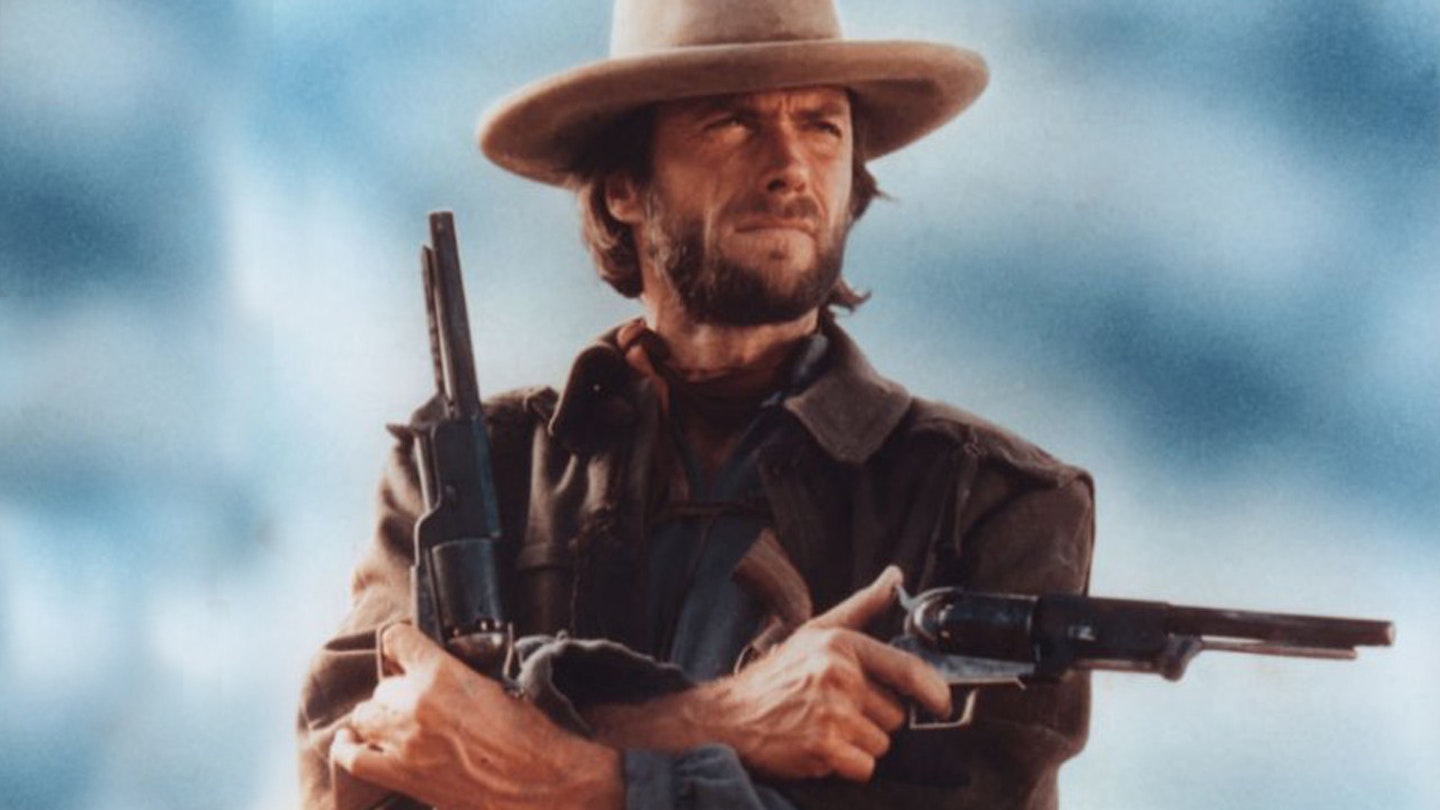
A Legacy Forever Changed
Today, The Outlaw Josey Wales is more than a Western. It is a paradox—a cinematic masterpiece stained by its troubled creation. Fans revisiting the film must now wrestle with the uncomfortable truth: art can be timeless, but its origins can be tainted.
The cast’s raw performances, Eastwood’s uncompromising vision, and Chief Dan George’s authenticity gave the film its enduring power. Yet behind every scene lies a darker reality that forces us to ask: Whose stories are we celebrating, and at what cost?
What was once a tale of vengeance in the Wild West is now remembered as a story that embodies both the brilliance and the betrayals that define Hollywood itself.
