The shocking and sordid history of the French Revolution continues to haunt us, as new revelations about the remains of the guillotine’s most infamous victims emerge. Recent investigations have uncovered the disturbing fate of the bodies of King Louis XVI and Queen Marie Antoinette, whose remains were unearthed and mishandled in the chaotic aftermath of their executions.

In a period marked by violence and upheaval, the French Revolution saw thousands dragged to the guillotine, including the monarchs themselves. King Louis XVI was executed on January 21, 1793, followed by Marie Antoinette on October 16, 1793. Their deaths symbolized the end of the monarchy, but what transpired after their executions is equally chilling. Both bodies were hastily buried in unmarked graves, their remains subjected to desecration by revolutionary mobs who sought to erase the monarchy from history.
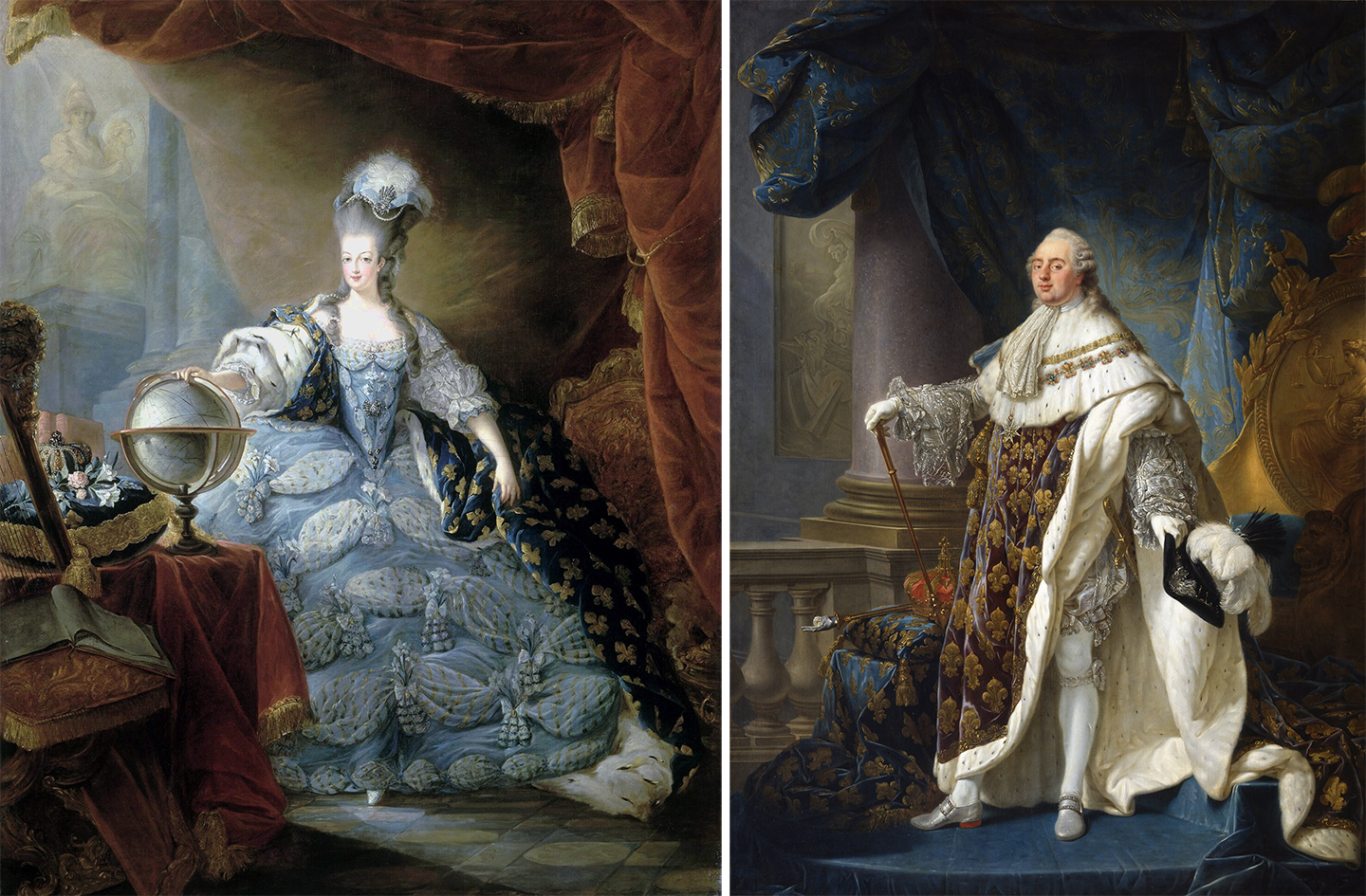
The gruesome details of their burial have recently resurfaced, revealing that their coffins were broken open, and their remains were unceremoniously discarded. Witness accounts describe the chaos as gravediggers hastily buried the bodies of the royal couple, covering them with quicklime to expedite decay and mask the stench. The remains of other royal figures were also exhumed during this time, their bodies tossed into mass graves, a grotesque act of vengeance against the former ruling class.
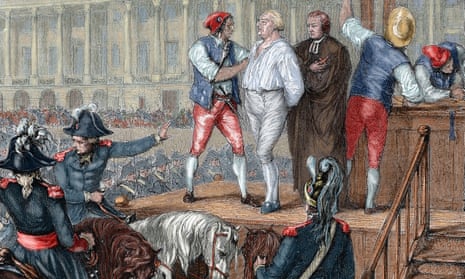
In a shocking twist, decades later, efforts were made to locate and properly inter the remains of Louis XVI and Marie Antoinette. In 1814, King Louis XVIII ordered an investigation, leading to the discovery of their bodies in a state of disarray. The exhumation revealed that while Marie’s remains were relatively preserved, Louis’s body had suffered significant degradation.
The royal couple was finally interred in a dignified manner at the Basilica of Saint-Denis, a site reserved for French monarchs, but the journey to this final resting place was fraught with horror. Eyewitness accounts detail the somber procession, attended by mourners and military honors, contrasting sharply with the brutal reality of their initial burial.


As we reflect on this dark chapter in history, the legacy of the French Revolution remains a stark reminder of the lengths to which societies may go in the name of justice and retribution. The fates of Louis XVI and Marie Antoinette serve as haunting symbols of the revolution’s violent upheaval, and the ongoing discovery of their remains continues to evoke strong emotions and debates about the past. The question remains: what does this history tell us about the nature of power, justice, and the human condition? As we delve deeper into these revelations, the urgency to understand and learn from this tumultuous period in history has never been more pressing.
