BREAKING NEWS: The Legacy of Chairman Mao’s Death and His Preserved Body
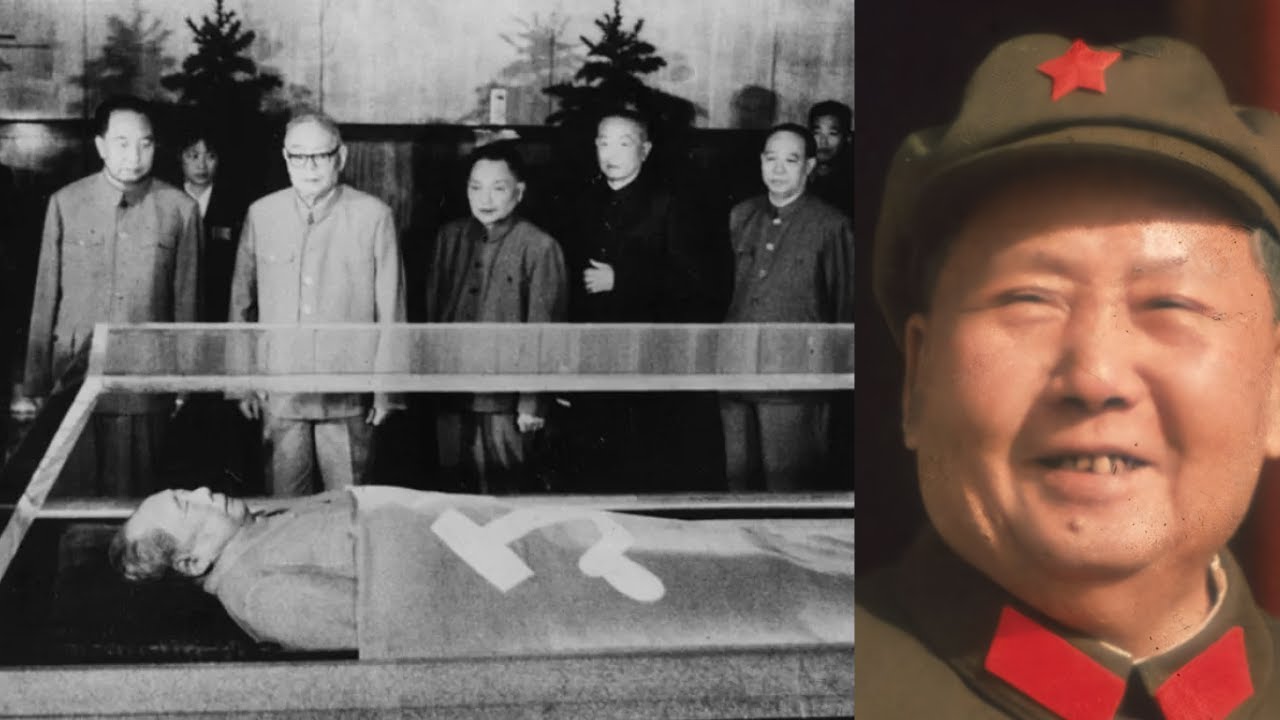
In a shocking revelation, the haunting legacy of Chairman Mao Zedong, the architect of modern China, continues to captivate and disturb the nation even decades after his death. On September 9, 1976, Mao, who led China for nearly three decades, passed away at the age of 82, marking the end of an era defined by revolution, suffering, and a complex legacy that still resonates in Chinese society.

Mao’s death was not merely a political event; it was a seismic shift for millions who revered him as a father figure. The announcement of his passing sent shockwaves across the nation, with state radio delivering the news in a somber tone that echoed with emotion. For many, it was incomprehensible that the man who had been the face of their nation since 1949 was gone. Grief swept through the streets of Beijing, where millions donned black armbands, bowed before his portrait, and wept openly in public displays of mourning.
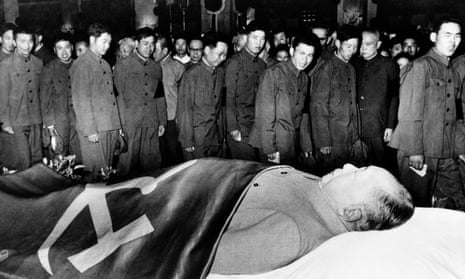
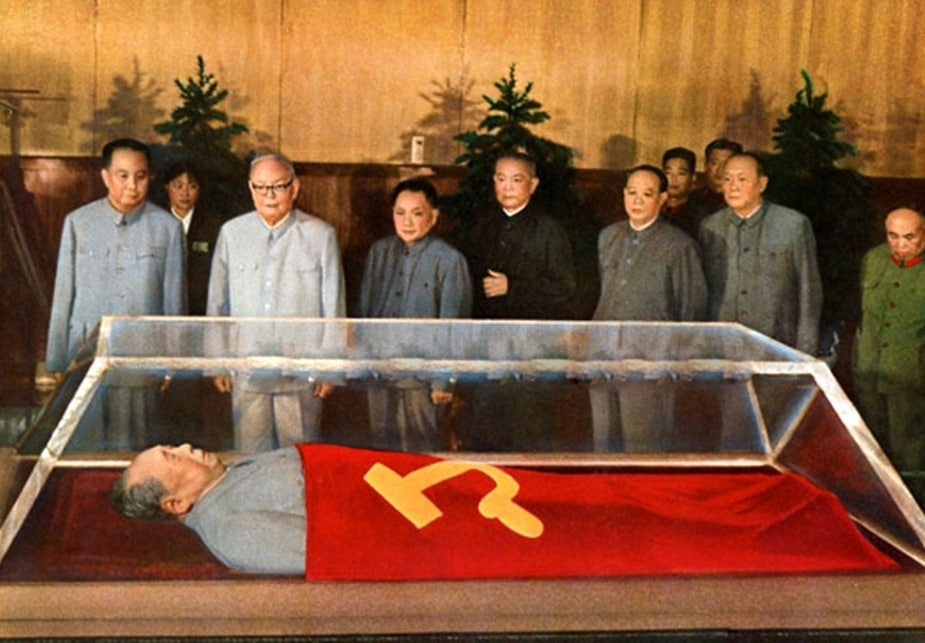
Yet, amid the sorrow, the Communist Party orchestrated a carefully managed narrative, praising Mao as a genius and a hero while conveniently sidelining the darker chapters of his rule, including the catastrophic Great Leap Forward and the Cultural Revolution that led to the suffering and deaths of millions. His body, instead of being cremated as per his wishes, was embalmed and placed in a crystal coffin within the Chairman Mao Memorial Hall, where it remains on display to this day.

The meticulous preservation of Mao’s remains has been a subject of intrigue. Following his death, a team of scientists worked tirelessly to ensure his body was kept in pristine condition. The process involved cooling the corpse, injecting chemicals to prevent decay, and even facing mishaps that led to his head swelling alarmingly. Today, visitors to the memorial can see Mao’s body, appearing as if he is merely asleep, a chilling reminder of his enduring presence in Chinese culture.
As we mark the anniversary of his death, we are reminded of the profound impact Mao had on the nation. His policies and campaigns left deep scars that continue to affect China, yet his image remains omnipresent—his portrait hangs in prominent places, and his face is printed on the currency. Mao remains a symbol of revolution and national unity for the Communist Party, even as his legacy is scrutinized by historians and citizens alike.
![Last public appearance of Chinese leader Mao Zedong, 1976. [1200×871]. : r/HistoryPorn](https://preview.redd.it/o2byz3i7scy71.jpg?width=1080&crop=smart&auto=webp&s=b834e6c95d6383edafd4915164580bf056b15313)
The death of Chairman Mao was a watershed moment in modern Chinese history, signaling the end of radical revolution and paving the way for significant changes in the years to come. As the nation reflects on this pivotal event, the complexities of Mao’s legacy linger, evoking both reverence and remorse in a society still grappling with the shadows of its past.
