BERGEN-BELSEN, GERMANY – The final days of Anne Frank, whose diary made her a global symbol of hope, were a brutal descent into disease and starvation inside a concentration camp designed for death by neglect, new historical analysis confirms.
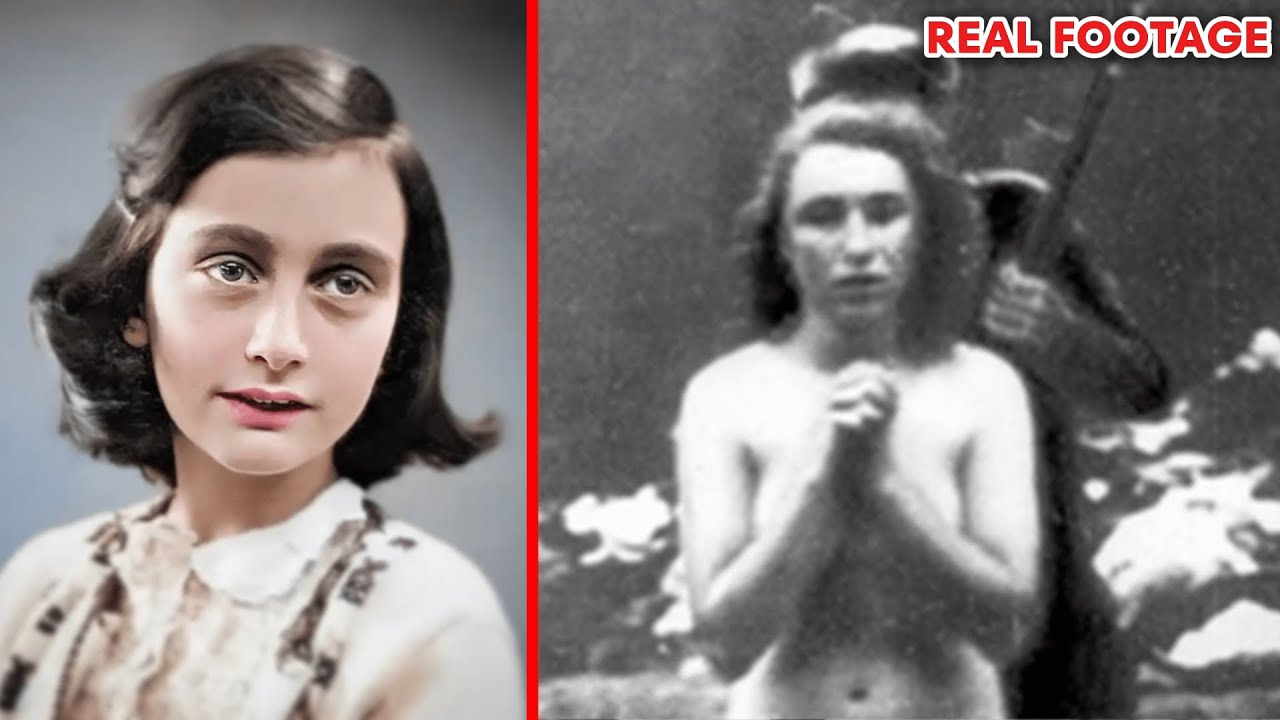 The 15-year-old, who survived the initial selection at Auschwitz, ultimately perished from typhus fever in the squalor of Bergen-Belsen, likely in February 1945—two full months before the camp’s liberation. Her body was discarded into a mass grave, one among tens of thousands.
This stark conclusion, drawn from survivor testimony and research by the Anne Frank House, shatters the long-held belief that she died merely weeks before British troops arrived. It underscores the Holocaust’s machinery of murder beyond the gas chambers: systematic starvation, calculated overcrowding, and deliberate deprivation of medical care.
Anne and her sister Margot were transported to Bergen-Belsen in November 1944. The camp, swollen to many times its capacity, was a petri dish for epidemic disease. Prisoners lived in leaky tents, starved on minimal rations, and slept in filth.
By early 1945, a typhus epidemic raged. The disease, spread by body lice in the unsanitary conditions, killed hundreds daily. Witnesses who saw Anne in late January described a shivering, emaciated girl, bald from lice shaving, yet still speaking of her diary and her hopes to publish a book after the war.
 Within weeks, those hopes were extinguished. Historians now believe typhus symptoms manifested by early February. Margot Frank died first, reportedly falling from her bunk in a weakened state. Anne, delirious with fever, died shortly after. A fellow prisoner, Irma Sonn-Menkel, later testified to holding the dying girl in her arms.
“She was a nice, fine person,” Sonn-Menkel recalled. “She was delirious, terrible, burning up.” There was no medicine, no doctor, no intervention possible. The camp’s design ensured it.
When British forces liberated Bergen-Belsen on April 15, 1945, they found approximately 10,000 unburied corpses and 53,000 emaciated survivors, 28,000 of whom would later die. The scene was one of unimaginable horror. The camp was subsequently burned to halt the disease’s spread.
Anne Frank’s journey from a vibrant teenager chronicling her life in hiding to an anonymous victim of epidemic disease illustrates the Holocaust’s pervasive cruelty. She had endured the Secret Annex for over two years, only to be betrayed on August 4, 1944.

After arrest, she survived the selection at Auschwitz-Birkenau, a fate that sent countless children directly to the gas chambers. Her transfer to Bergen-Belsen, a camp without gas chambers, offered no reprieve. It was a place where the Nazi regime achieved mass murder through engineered neglect.
Her father, Otto Frank, the family’s sole survivor, learned of his daughters’ deaths months after liberation. Upon returning to Amsterdam, he was given Anne’s scattered diary pages, saved by helper Miep Gies. He published them in 1947, forging her legacy.
“The Diary of a Young Girl” has since been translated into over 70 languages, transforming Anne into an enduring icon of lost potential and steadfast hope. The famous annex in Amsterdam became a museum, a solemn memorial to her life in hiding.
 Yet the reality of her death stands in stark contrast to the hope in her prose. She wrote of believing in people’s goodness just weeks before her arrest. Her end, however, was one of profound anonymity and suffering, a deliberate outcome of Nazi policy.
The exact date of her death remains unknown. No official record was kept. Her remains lie somewhere in the mass graves of Bergen-Belsen, alongside thousands of other victims rendered nameless by the genocide.
This narrative reframes her not only as a symbol of hope but as a testament to a specific, grinding method of extermination. The Holocaust murdered with Zyklon B, but it also murdered with typhus, with starvation, and with cold indifference.
Anne Frank’s story is singular because her voice survived. For six million others, their stories, their fears, and their final moments were silenced forever. Her diary forces the world to remember, while her death forces it to confront the banality of evil that allowed a bright, young life to be extinguished by deliberate neglect.
