On Christmas Day 1989, the ruthless execution of Elena Ceausescu, the wife of Romania’s dictator Nicolae Ceausescu, sent shockwaves through a nation in turmoil. In a chilling display of power, the couple was executed by firing squad just hours after a hastily conducted trial that lasted a mere 55 minutes. This brutal act marked the violent end of a regime that had long ruled through fear and oppression.

Elena Ceausescu, once hailed as the “Mother of the Nation,” was a key enforcer of her husband’s iron-fisted rule. Born into poverty in 1916, she rose through the ranks of the Romanian Communist Party, leveraging her husband’s political ascent to gain unprecedented power. Despite her limited education and allegations of academic fraud, she became a prominent figure in the regime, overseeing critical sectors like the national pharmaceutical program, which was marred by corruption and inefficiency.
By the late 1980s, Romania was on the brink of collapse. Brutal austerity measures had led to widespread shortages of food, medicine, and basic services. As discontent simmered, protests erupted, culminating in violent confrontations with the regime’s security forces. The turning point came in December 1989 when protests in Timișoara ignited a nationwide revolution.

On December 21, as the Ceausescus delivered a choreographed speech in Bucharest, they were met with boos and jeers, revealing the fragility of their power. In a frantic escape attempt, they fled by helicopter, only to be captured by soldiers days later. Their final days were spent in a military base, where Elena’s arrogance and refusal to engage with her captors painted a stark picture of a regime out of touch with reality.
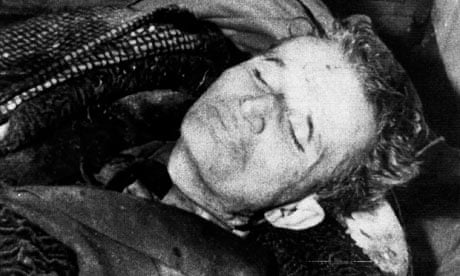
The military tribunal that sentenced them was more a spectacle than a legitimate legal process. Accused of genocide and economic sabotage, the couple’s trial was a mere formality, with no meaningful defense presented. As they were dragged into the courtyard for execution, Elena reportedly shouted, “I brought you into this world and now you’re going to kill me,” a haunting statement that resonated with the soldiers tasked with carrying out the order.

At approximately 2:50 PM, the firing squad, comprised of elite paratroopers, unleashed a hail of bullets, marking the end of a brutal regime. The execution was filmed and broadcast, intended as a final punctuation mark on the Ceausescus’ reign. International reactions were swift, with Western leaders expressing relief but condemning the lack of due process.

In the aftermath, Romania grappled with the legacy of the Ceausescus. Public opinion remains divided; some view their execution as necessary justice, while others see it as a failure of the legal system. The Ceausescus’ graves have become sites of both curiosity and reverence, reflecting the complex emotions surrounding their deaths.
Elena Ceausescu’s story serves as a stark reminder of the dangers of unchecked power and the fragility of justice in times of political upheaval. As Romania continues to teach this tumultuous chapter in its history, the questions surrounding the Ceausescus’ execution remain unresolved, echoing the complexities of a nation still coming to terms with its past. The swift collapse of their regime underscores a chilling truth: when built on fear, even the most formidable systems can fall in an instant.
